Could Your Building's Materials Be Blocking Your Mobile Signal?
Glass-heavy designs, solid concrete structures and energy-efficient materials are all great for design and sustainability. The downside? Many of these materials unintentionally weaken mobile signal before it even reaches the people inside.
If you’ve ever had full signal outside a building, only for it to disappear the moment you step indoors, this is usually why.
Why Building Materials Affect Mobile Signal
Mobile signal travels as radio frequency (RF) waves from nearby mobile masts. These waves are designed to travel through open space, not dense or reflective materials.
When RF waves hit certain surfaces, one of three things tends to happen:
They’re absorbed (the signal weakens or disappears)
They’re reflected (the signal bounces away)
They’re disrupted (signal becomes unstable or inconsistent)
The more layers a signal has to pass through, walls, glazing, insulation, floors, the weaker it becomes by the time it reaches the device.
In extreme cases, buildings can behave almost like a Faraday Cage, where signal is effectively trapped outside altogether.

Below are the most common culprits we come across across the UK and Europe:
1. Concrete
Concrete is extremely dense and one of the biggest signal killers. Reinforced concrete is even worse, as the metal rebar inside reflects RF waves as well as absorbing them.
2. Brick
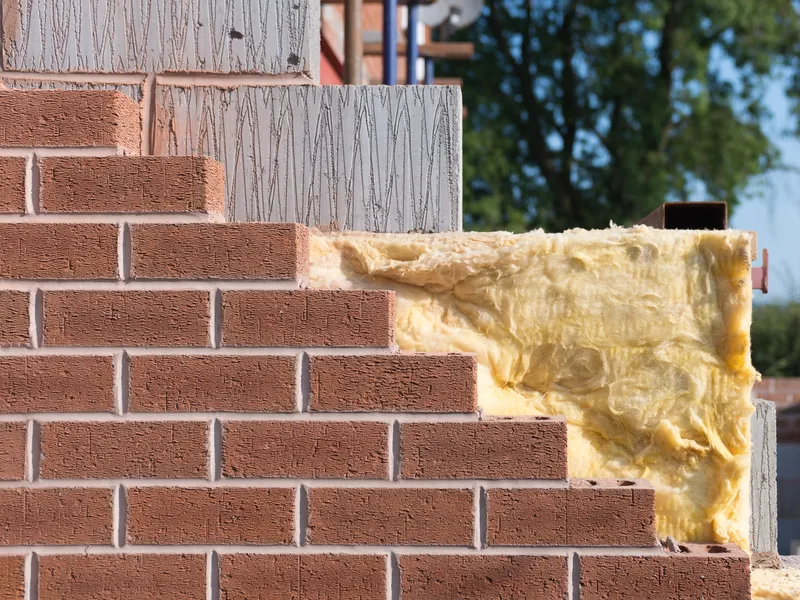
Very common in UK buildings. While not as severe as concrete, thick or multiple brick walls can significantly reduce indoor coverage, especially in older properties.
3. Steel
Steel frames, beams and cladding reflect mobile signal rather than letting it pass through. Buildings with steel frameworks often experience patchy or inconsistent coverage.
4. Low-E glass
Low-emissivity glass is designed to improve energy efficiency by reflecting heat but it also reflects mobile signal. It’s a frequent issue in hotels, offices and modern developments.
5. Insulation foils
Reflective foil insulation is widely used in modern construction. While excellent for thermal performance, it creates a barrier that mobile signal struggles to penetrate.
6. Plasterboard with foil backing
Often used during office refurbishments. On the surface it looks harmless, but the foil layer can quietly degrade signal across entire floors.
7. Stone and marble
Dense natural materials absorb RF waves heavily. These are common in older buildings and high-end interiors, where aesthetics come at the cost of connectivity.
8. Wood (layered timber builds)
On its own, wood isn’t a major issue. However, layered timber construction, combined with insulation and other materials, can noticeably slow signal.
9. Water and large tanks
Water absorbs radio waves. This is especially relevant in basements, plant rooms and service areas where large tanks or pipework are present.
10. Underground levels
Not technically a material, but worth including. Basements and underground floors are physically isolated from mobile masts, making outdoor signal almost impossible to rely on.
Where These Problems Usually Show Up
We see these signal issues regularly in environments such as:
Hotels with Low-E glass and reinforced concrete cores
Office buildings with steel frameworks and foil-backed walls
Hospitals and police buildings with extensive basement levels
Retail stores built around thick concrete or enclosed layouts
In these environments, mobile signal is part of how the building actually functions. When it’s unreliable, problems show up very quickly.
How Mobile Signal Boosters Solve The Problem
This is where professionally installed mobile signal boosters come in.
Ofcom-compliant CEL-FI systems work by capturing the strongest available outdoor signal, boosting it safely and legally, and distributing it evenly throughout the building.
Rather than fighting against the building materials, boosters work around them and deliver reliable indoor coverage across the entire building.
The result is consistent voice and data performance across offices, rooms, corridors, basements and shared spaces.
Looking To Improve Signal Inside Your Building?
So, if you’re struggling with indoor mobile coverage, the first step is understanding what your building is doing to the signal.
We offer a free solution design, allowing us to assess the layout, materials and available signal before recommending the right approach.
Sometimes the issue isn’t the network... It’s the building itself.